

the ego trip

please note: this essay can be read in two ways: you can follow the section prompts and choose your path, or simply read straight through. the choice is yours.
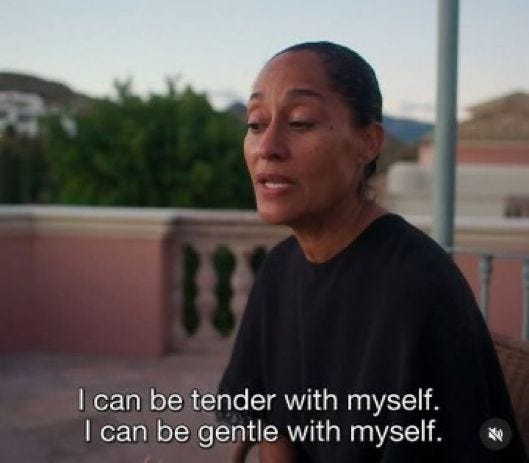
recently i caught myself rehearsing a conversation that hadn’t happened (and if i’m being honest, probably never would).
yet i found myself preparing for all the possible outcomes of where the convo would go, perfectly working through plan b, c, and d.
this is how half of my conversations go in my mind. a constant rehearsal of what might happen next, trying on different moods, responses, and reactions, and how i might prepare for any variety of them.
getting all of my points neatly assembled.
emotions even-keeled.
mug on.
ready for whatever.
and, for a long time, i considered this self-awareness.
something started to unravel the edges of that logic.
i began to wonder if it’s something else entirely.
if you would like to understand what just happened, continue to section 2.
if you would prefer to keep a safe distance from it, continue to section 3.
if you would like to manage where this essay goes next, continue to section 4.
if you would like to let the moment unfold without interference, continue to section 5.
section 2_ [the analyst _intellectual control]
i tend to see duality in everything.
for years i told myself this was objectivity.
the ability to step outside of my own feelings.
to remember there were other perspectives.
noble, right?
but something else took root inside of that practice.
i began to fixate on the facts and patterns. separating the emotional experience almost entirely. removing myself from center and relegating myself to merely a witness.
as if clarity could prevent the pain of it all.
as i write this, i’m instantly teleported back to a particular moment in my life. i have probably replayed that day over a million times in my head. freezing frame, checking for signs, looking for patterns and cues i must have missed. studying the memory again. and again. and again.
my chest tightens. breath hinges slightly.
my eyes flutter close as if trying to clear the picture even more.
i note the time,
the faces present,
the days to follow, the days before,
the series of choices leading up to that moment,
the things spoken.
i never interrogated how i felt. only if it happened.
every time i replay the memory, it stops there. a damn near perfect accounting of an event.
i sigh.
relief creeps in after the spiral.
a voice deep inside of me reminds me: as long as i can remember the pattern, i can call this foresight.
this is where the voice begins its work.
it usually starts with asking a series of sensible questions: what just happened? how did we get here? were there signs? did i miss or ignore them? could it have been avoided?
the mind excels at this kind of work. it builds maps, identifies patterns, rehearses outcomes and sometimes it works. sometimes it doesn’t. but the effort feels important. necessary even.
as if understanding could be preventative.
if you would like to keep studying the pattern, continue to section 6.
if you would like to admit that some things cannot be understood in advance, continue to section 5.
section 3_ [the protector _emotional withdrawal]
…that was a close one.
now we’re safe.
over the years i have found ways to pride myself on my rational and diplomatic nature.
never wanting to rock the boat too much, more often than not relishing in my ability to go with the flow.
calm.
cool.
collected.
until i wasn’t.
ever since i was little, i’ve always been fascinated with the idea of lifelong friendships.
the kind that tag along with you through life.
aging with you.
building constant memories and secrets over a lifetime.
an unspoken agreement: we would be by one another’s side.
until we aren’t.
over the past few years, two friendships quietly slipped out of my life.
one ended in a conversation that never quite resolved. life went on.
the other faded slowly, message by message, until there were none left. we became strangers to one another.
the silence became comforting.
i didn’t fight it.
sometimes i think about reaching out. but the thought dissolves before the message is written.
some friendships finish their work in our lives. the voice inside me seems satisfied with that answer.
and like clockwork, there’s that voice again.
urging me to keep my distance. reminding me to find the exit before things get too complicated.
maybe you’ve felt this feeling before — that small tightening at the back of your throat, the urge to step away before something can hurt you. and your moves before your mind can argue.
here, safety can be found in the exit.
before things get too complicated. preemptive even.
it’s probably best to leave before the damage is done. that way you don’t suffer the disappointment or heartbreak.
and there it is again — that voice. quietly warning you.
if you would like to leave the room before anything can hurt you, continue to section 6.
if you would like to stay and see what uncertainty does, continue to section 5.
section 4_ [the strategist _outcome management]
alright.
before we go any further, let’s pause.
if we’re going to move through this together, it might help to organize things a little.
not everything needs to be left to chance.
some of us prefer a little structure.
a map.
a plan.
after all, if you can guide the direction of a story, you can avoid the parts that get messy.
you can skip the uncomfortable scenes.
cut them entirely, if you like.
you might recognize this instinct.
the quiet urge to manage the moment before it manages you.
to adjust the pacing.
to control what gets revealed.
to decide when something begins.
and more importantly—
when it ends.
and if you’re here, reading this section instead of the others,
there’s a chance you like knowing where things are going.
nothing wrong with that.
most of us do.
uncertainty can feel… inefficient.
but control has its own tricks.
the more tightly you hold the narrative,
the less room there is for anything unexpected to enter it.
even the things that might change you.
if you would like to keep guiding where this essay goes, continue to section 6.
if you would like to release control and see what happens next, continue to section 5.
section 5_ [the illusion of surrender]
truths can be sneaky. you think that if you keep your eye on it long enough you won’t lose it. but sometimes, almost like vapor, they disappear before our very eyes.
if you chose surrender, something interesting has already happened.
you have stepped into unfamiliar space.
for a moment, analysis softens. protection loosens. strategy loosens its grip.
you think: maybe i can just let it happen.
the chest unclenches slightly. a small tremor of relief moves through your body.
for a few quiet moments, nothing needs to be solved.
you sit with the unknown.
and then, almost imperceptibly, something returns.
a small voice.
soft.
pleased with itself.
look how well you’re surrendering.
the mind is patient that way.
even letting go can become a performance.
you notice the body again — a faint tension in the shoulders, the mind drifting toward what-ifs.
the urge to understand.
to prepare.
to anticipate.
surrender, it seems, is not quite as simple as it first appears.
if you would like to continue exploring surrender, continue to section 7.
if you would like to reconsider your options, continue to section 6.
section 6_ the pattern
by now you may have noticed something.
no matter which path you chose, there’s a subtle familiarity threading through the rooms.
study the pattern.
protect yourself.
strategize.
surrender.
different instincts. different voices.
but the pulse beneath them is the same.
it hums quietly in the chest — the recognition that every choice, every rehearsed step, every act of careful observation shares a common goal:
to manage what comes next.
sometimes it works.
sometimes it doesn’t.
but the effort itself feels necessary.
like tightening a rope around a floating balloon to keep it from drifting too far.
if you want to see why this keeps happening, continue to section 7.
if you want to linger here and feel the thread, continue to section 8.
section 7_ the reveal
at this point it might be worth noticing who has been speaking.
every path, every nudge, every invitation to act or wait — it carries the same quiet authority. the same calm reasoning. the same soft promise: follow this logic and the unexpected can be kept at bay.
there is a name for the voice that speaks this way.
the ego.
not the loud arrogance we often imagine. not inflated pride. something quieter than that.
a patient architect, designing the decision tree before the first step is taken.
the chest tightens again at the realization:
every path in this essay, every room you visited, has been curated by the same mind. the same careful, protective, persuasive presence.
if you would like to meet the ego, continue to section 8.
section 8_ the ego, eulogized
if you have arrived here, it may be time for a small acknowledgment.
the ego has labored tirelessly. it anticipated disappointment, rehearsed scenarios, mapped outcomes, softened edges before they could cut too deeply. it has saved you more times than you can count.
as i write this, a small ache in my chest reminds me of the weight it carried — the constant vigilance, the quiet humming beneath every decision.
but protection can become something else.
a guard at the door who forgets the house is no longer under threat.
control becomes habit.
identity begins to hide inside that habit.
this is a funeral, not for an enemy, but for a companion who did its job well.
let us grieve, briefly, the voice that shaped every map, every option, every careful rehearsal.
if you want to return to the safety of control, go back to section 1.
if you want to move forward without negotiating every outcome, continue to section 9.
section 9_ after the funeral
life after control is not particularly dramatic.
the chest loosens.
thoughts still whisper.
old patterns linger at the edges, like shadows in a sunlit room.
analysis returns.
protection clears its throat.
strategy rehearses one last time.
but now you notice it.
you recognize the voice.
recognition changes the rules.
you can follow it or not.
you can let moments arrive without rehearsal.
you can allow outcomes to unfold without a map.
sometimes you will follow it.
sometimes you will not.
but now the ego is no longer in charge.
it is merely present.
observing.
suggesting.
waiting.
and the world, unpredictable as ever, moves forward anyway.
the hum of awareness pulses in your chest — a quiet reminder:
survival and release are not opposites.
sometimes letting go is its own form of preparation.
Preach.
Wow - the journey you just took me on! What a thoughtful reflection and choose your own experience. Thank you for sharing this 🙏🏼